A curated journey · Designed and travelled by Parth
Fourteen Days in France, Belgium & the Netherlands
Paris · Versailles · Brussels · Bruges · Antwerp · Amsterdam · The Tulip Fields — four cities, three countries, twelve nights, and the whole thing on rails.
Curator's Statement
The first time I traveled this route, I was in my twenties with a Eurail pass and a bed in a twelve-person dorm.
It was one of the best trips of my life. This is that same route, run again — the same cities, the same number of nights in each — for two people who would now rather have a canal view and a proper bed.
The shape of that original trip was better than we knew at the time. Five nights in Paris, which is the minimum that lets you stop sprinting and start noticing. Two in Brussels, one of which is best spent somewhere else entirely. One night in Antwerp, a city almost every itinerary skips and almost nobody regrets. Four in Amsterdam, which sounds like a lot until you realise the tulip fields are an hour away and only open for eight weeks a year.
So I have kept the bones and rebuilt everything else. The hostels are gone, replaced by four hotels chosen on a single criterion: what you see when you walk out the front door. A seventeenth-century mansion on Place des Vosges. A five-star on the corner of the Grand Place. A rooftop above the old city in Antwerp. Twenty-five linked canal houses in Amsterdam. None of them costs more than four hundred dollars a night, and not one requires a taxi to begin the morning.
And the timing is not incidental. Mid-April is the narrow window when the Dutch bulb fields are at peak bloom — a matter of about two weeks, in a season that lasts eight. Run this itinerary in June and it is still a very good trip. Run it in the second half of April and the last day of it is one of the more extraordinary things in Europe.
Each day opens with a short narrative, followed by insider notes — the things that are easy to get wrong and expensive to learn the hard way — then where to eat, including something sweet for every day, and the approximate cost of every ticket mentioned. Prices are in euros and are planning estimates, not quotations; confirm at booking. Reserve restaurants ahead — the good rooms in all four cities are small, and they fill.
The Route at a Glance
Four cities on one high-speed spine.
Where you sleep
| When | Where | Nights |
|---|---|---|
| Day 1 | Overnight flight from North America | — |
| Days 2–6 | Paris, with a full day at Versailles | 5 |
| Days 7–8 | Brussels, with a day trip to Bruges | 2 |
| Day 9 | Antwerp | 1 |
| Days 10–13 | Amsterdam, with a day at Keukenhof | 4 |
| Day 14 | Departure from Schiphol | — |
How you move
- Paris to Brussels — Eurostar, 1h25, city centre to city centre. International service with border control: allow 45 minutes at Gare du Nord.
- Brussels to Bruges and back — an hour each way, two or three trains an hour, no reservation. You do not check out of your Brussels hotel.
- Brussels to Antwerp — 45 minutes, no reservation. Antwerp to Amsterdam — direct intercity, a little over two hours.
- Within all four cities — entirely on foot, with Métro, tram or canal boat for the longer hops. There is no car on this itinerary at any point, and there should not be: every station is in the middle of its city, total rail time is under six hours, and a car would cost more, park worse, and be actively unwelcome in three of the four historic centres.
Where You Stay
Four hotels, chosen for their front doors.
All under USD 400 per night for two sharing in April. Every property puts the next morning's first attraction within a fifteen-minute walk.
PARIS · 5 NIGHTS · USD 370–420
Le Pavillon de la Reine & Spa
A 17th-century mansion set back behind a courtyard on Place des Vosges, the oldest square in Paris. Small spa, complete quiet. The Marais, Île Saint-Louis and the Louvre all on foot.
BRUSSELS · 2 NIGHTS · USD 300–360
Hotel Amigo
Rocco Forte five-star, forty seconds from the Grand Place, with Magritte prints in the rooms and the best concierge in the city. Rates soften markedly on weekends.
ANTWERP · 1 NIGHT · USD 240–300
Hotel Julien
Two linked historic houses, a spa in a 16th-century cellar, and a panoramic roof terrace three minutes from the cathedral. The most romantic one-night stop on the route.
AMSTERDAM · 4 NIGHTS · USD 340–420
Pulitzer Amsterdam
Twenty-five linked canal houses between the Prinsengracht and Keizersgracht with a garden in the middle. Anne Frank House is a seven-minute walk. Book early — April is tulip season.
If you would rather — alternatives in each city
- Paris — Hôtel Bourg Tibourg for a darker, Jacques Garcia-designed Marais room; Hôtel Récamier on Place Saint-Sulpice for Saint-Germain; Les Rives de Notre-Dame for ten rooms facing the river.
- Brussels — Juliana Hotel & Spa for the indoor pool and hammam the Amigo lacks; Le Dixseptième for something smaller and antique-filled.
- Antwerp — Hotel FRANQ, a Relais & Châteaux in a neoclassical bank with the vaults turned into a wine cellar; Botanic Sanctuary is the city's grandest and sits well above this budget.
- Amsterdam — The Dylan for a quieter, design-led stay; Ambassade Hotel for ten canal houses and a famous library; Hotel Estheréa for something warmer and less expensive.
- A note on rates — all four cities price by demand: Brussels is cheapest at weekends, Amsterdam spikes hard in tulip season, King's Day and Pride. Figures assume a mid-April booking made three to four months out, include city tax, exclude breakfast unless bundled.
What This Trip Costs
Roughly $10,700 for two, done comfortably.
For two travellers sharing a room in mid-April — high season for the Netherlands, shoulder season for France and Belgium. International airfare not included.
Estimated budget · Two travellers · 12 nights
| Accommodation — 12 nights across four properties, all four-star and above | $4,500 |
| Food and drink — lunches, dinners, coffee, aperitifs, something sweet daily | $2,600 |
| Attractions and tickets — every admission listed, for two | $1,000 |
| Romantic add-ons — private canal sloop, Versailles rowboat, Eiffel champagne bar, Seine dinner cruise | $700 |
| Optional evenings — Moulin Rouge dinner show, an Amsterdam techno night, a coffeeshop stop | $700 |
| Intercity rail — Eurostar, Bruges return, Antwerp, Amsterdam | $400 |
| Airport transfers — private car at CDG, train to Schiphol | $220 |
| Local transport — Métro, trams, RER to Versailles, Keukenhof shuttle | $200 |
| Tips, incidentals, souvenirs — including Belgian chocolate and Dutch bulbs with the paperwork | $380 |
| Total, excluding international flights | ≈ $10,700 |
Where the money actually goes: accommodation is a little under half the budget, and Paris and Amsterdam are almost all of that half. Five nights on Place des Vosges and four in a canal house during tulip season are the two largest line items — and the two that most change how the days feel, because in both cities the hotel location determines whether your morning starts on foot or in a queue.
LEANER
≈ $7,000
Keep all four cities and every attraction, but move to well-located four-stars: Hôtel Jeanne d'Arc in the Marais, The Dominican in Brussels, Sapphire House in Antwerp, Hotel Estheréa in Amsterdam. One restaurant meal a day, skip the private sloop. Nothing on the sightseeing list changes.
ELEVATED
$18,000+
The Ritz or Le Meurice in Paris, a canal-view suite at the Pulitzer, Botanic Sanctuary in Antwerp, private guides at the Louvre and Rijksmuseum, a chauffeur for the Versailles day, and a chartered boat for the Amsterdam evening.
OUTSIDE TULIP SEASON
20–25% less
The same itinerary in late May, September or early October costs materially less in Amsterdam and the queues everywhere are shorter. You lose Keukenhof entirely, which is a real loss; the Day 13 alternative is Haarlem and Zaanse Schans — good, but not the same.
Costs are estimates in US dollars at prevailing exchange rates and are intended for planning. They are not a quotation, and final pricing depends on travel dates, availability, and how you choose to travel.
Day 1 · Departure
The Evening Flight Out
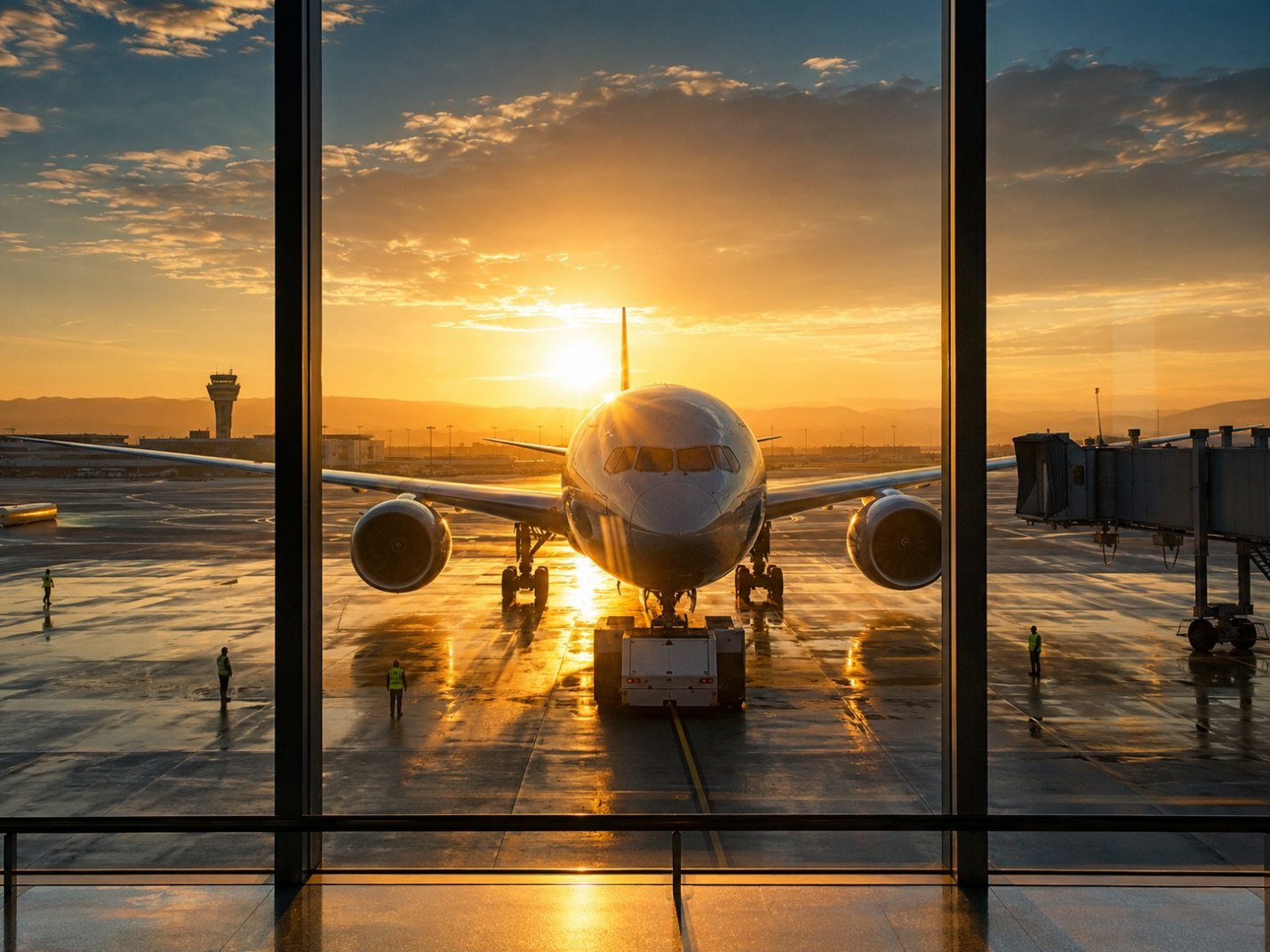
The best flights east leave at dinner and land at breakfast. Illustrative image
The whole rhythm of this trip depends on one decision made before you leave home: take the evening departure. A flight leaving North America between 5pm and 8pm puts you on the ground in Paris between 8am and 10am, which hands you a full first day instead of a wasted one. It is the single highest-leverage choice on the itinerary and it costs nothing.
Eat properly at the airport rather than waiting for the tray, ask for the wine early and stop after one, and set your watch to Paris time as you board. Seven hours is not a long sleep, but it is long enough if you treat it like one. The people who struggle with jet lag on this route are almost always the people who watched three films and landed wired.
Insider Notes
- Buy an eSIM before you leave. You will want data the moment you clear customs — for the transfer, timed-entry QR codes, train platforms. Airalo, Holafly and Saily all cover France, Belgium and the Netherlands on a single regional plan.
- Download offline maps for all four cities. The canal belt in particular is a place where a dropped signal costs you twenty minutes.
- Pre-book the airport transfer, do not improvise it. Charles de Gaulle at 9am with luggage is not the moment to be comparing options.
Insider Notes, continued
- Pack for twelve degrees and rain. Mid-April here is genuinely lovely and genuinely unreliable. A light waterproof, a scarf, and one warm evening layer cover everything.
- Photograph your passports and keep the images somewhere you can reach without your phone unlocked.
Tickets & Costs
| Regional eSIM, 10–20GB, three countries | USD 25–45 |
| Airport parking or transfer at departure | USD 60–120 |
Day 2 · Paris
Arrival, and the Two Islands
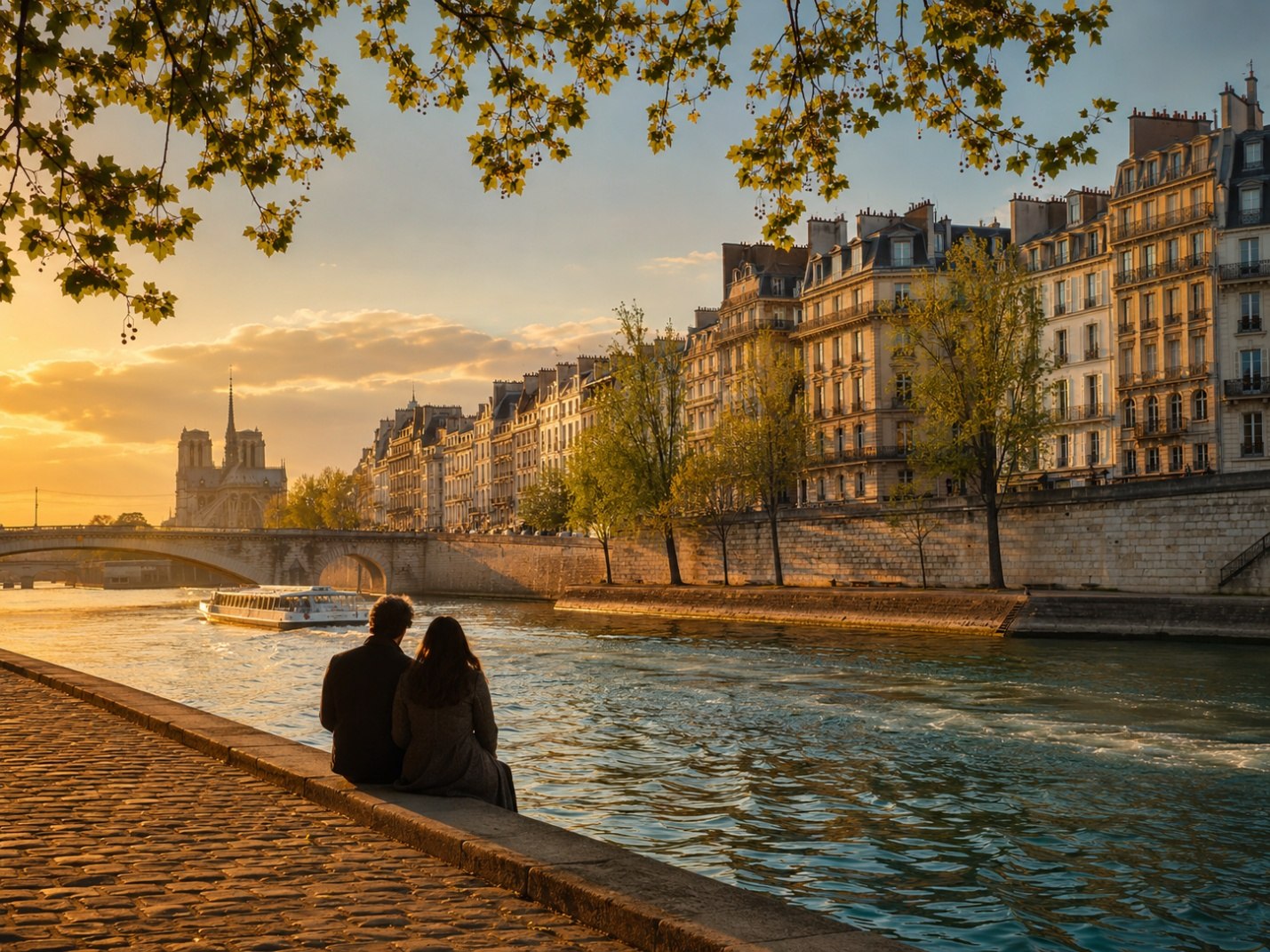
The first afternoon in Paris is for walking, not for museums. Illustrative image
You land at Charles de Gaulle around breakfast and you should be standing in the Marais by mid-morning. Rooms are rarely ready before three, so leave the bags at the desk and walk straight back out. This is the day to resist ambition entirely — the first afternoon in Paris is for calibration, not for ticking things off, and everything you attempt while running on four hours of aircraft sleep you will do badly and remember poorly.
Start at Place des Vosges, which is essentially your front garden for the next five nights: the oldest planned square in Paris, arcaded on all four sides, and quiet in a way the rest of the Marais is not. Work south through the Village Saint-Paul and its courtyard antique dealers, cross the Pont Marie onto Île Saint-Louis, and give the afternoon to the two islands. Berthillon is on Rue Saint-Louis en l'Île and deserves the detour. Then walk the length of the island, cross to the Île de la Cité, and end at Square du Vert-Galant — the little triangular garden at the very tip, below the level of the road, where Parisian couples have been sitting on the stone at sunset for two hundred years. Dinner in the Marais, early, and be asleep by eleven.
Insider Notes
- Do not nap past four o'clock. A twenty-minute lie-down at two is recovery; a two-hour sleep at five costs you the next three days.
- Take a private transfer from CDG on arrival day and the RER B afterwards. The train is fast and cheap and perfectly good — but not with luggage, jet-lagged, at the far end of a long corridor at Châtelet. Ninety euros buys you a door-to-door start.
- Do the Paris Museum Pass arithmetic before you buy. On this itinerary a four-day pass is roughly break-even; what it genuinely buys is the ability to change your mind about an afternoon.
- Berthillon's own shop closes Monday and Tuesday — the licensed cafés along the same street serve the identical ice cream. Look for the green sign.
- Sunday is the Marais at its best — one of the few quarters where shops open, and the whole neighbourhood comes out for it.
Where to Eat
- Lunch — Chez Janou, a Provençal bistro behind Place des Vosges with a chocolate mousse they leave on the table in a bowl the size of a hubcap.
- Dinner — Chez Julien, on a corner where the Seine, a medieval church and a wisteria-covered façade all arrive at once. Book a table outside and ask for the corner.
- Sweet — Berthillon: order the salted butter caramel and the wild strawberry together.
Tickets & Costs
| Private transfer, CDG to the Marais | €90–110 |
| RER B, airport to central Paris | €13 |
| Métro carnet of 10 / single ticket | €17.35 / €2.50 |
| Paris Museum Pass, 4 days | €80 |
Day 3 · Paris
The Tower, and the River Beneath It
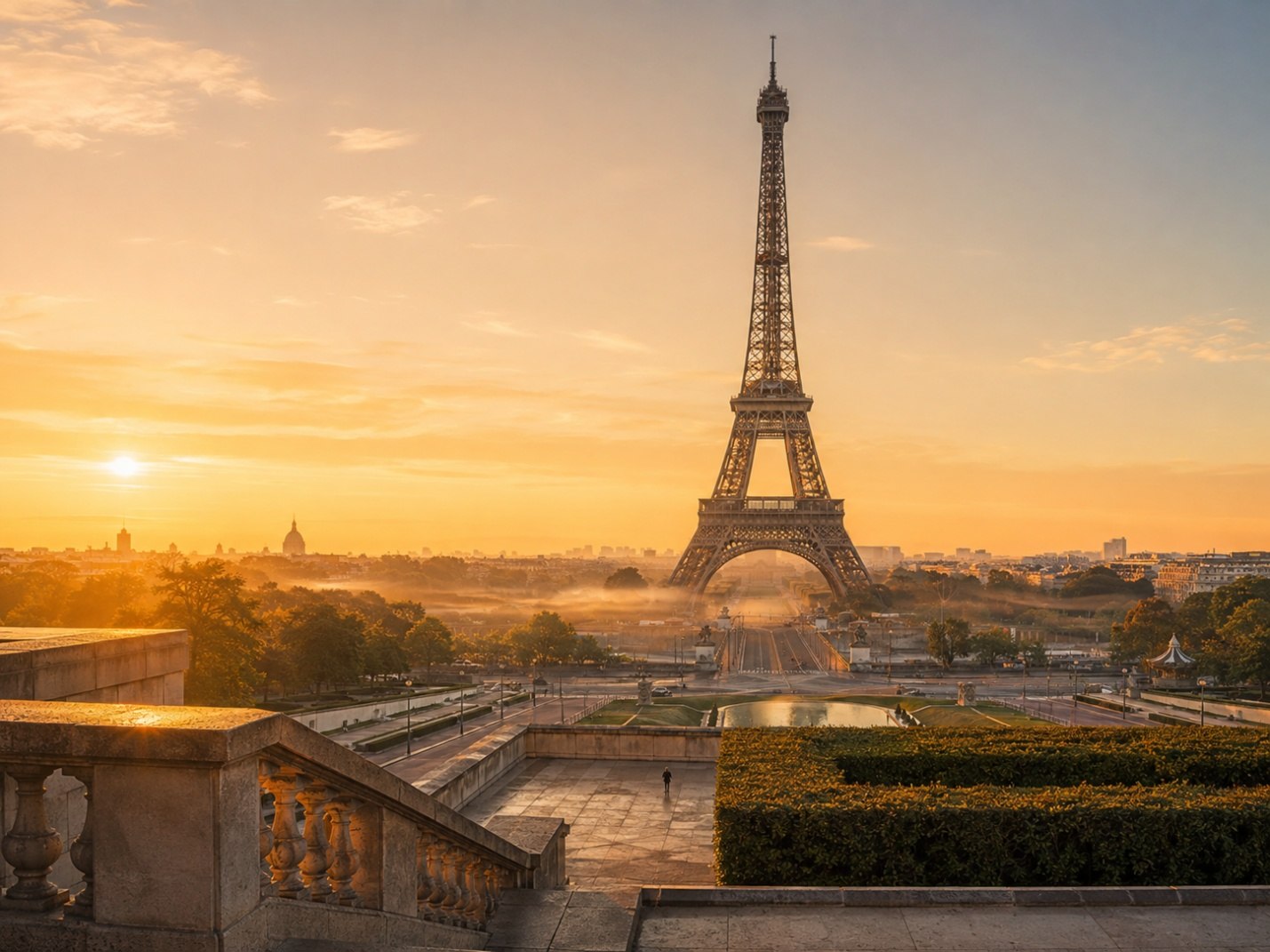
Trocadéro before eight is the only time the view belongs to you. Illustrative image
Do the Eiffel Tower properly and it is worth every euro; do it badly and it is two hours of queueing for a view you could have had from a rooftop bar. The trick is to split the day in two. Go early to Trocadéro — before eight, ideally — when the terrace is empty and the light on the iron is pink, and take the photograph everyone comes for while there is nobody in it. Then walk down through the Jardins du Trocadéro, cross the Pont d'Iéna, and go find breakfast on Rue Cler.
Come back to the tower late. Book the summit lift for the last hour before sunset, so you go up in daylight and come down into a lit city, and buy a glass at the champagne bar on the top deck because it is the most expensive and most justifiable drink in Paris. Afterwards, cross to the Champ de Mars, sit on the grass with the rest of the city, and wait for the hour to strike — twenty thousand lights flash for five minutes, and it remains, unfashionably, one of the great sights in Europe. Dinner on the river, or on a rooftop with the tower still in frame.
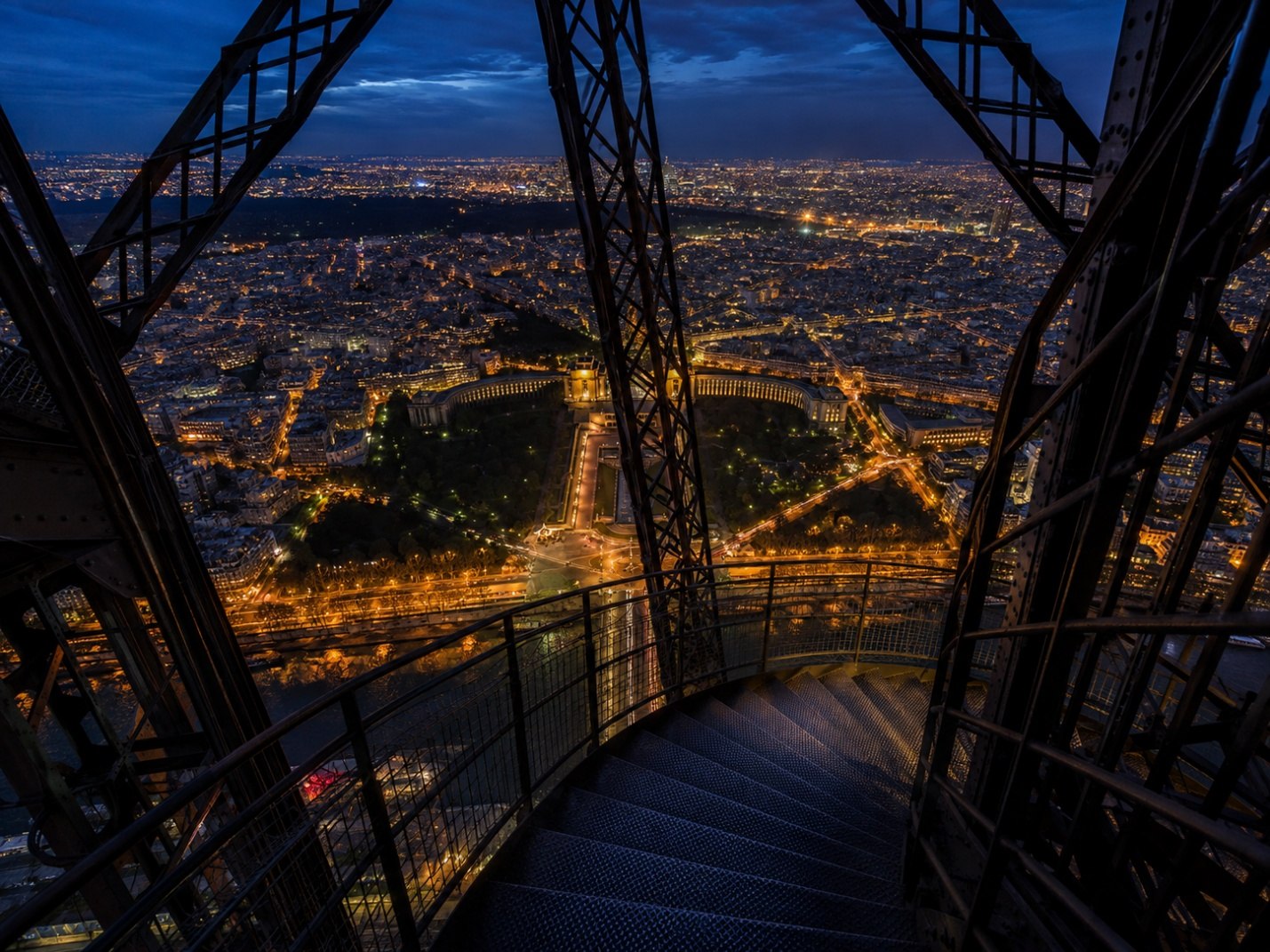
The stair descent after dark — the best view in Paris that nobody queues for. Illustrative image
Insider Notes
- Summit tickets go on sale sixty days ahead at 8:30am Paris time and sunset slots are gone within the hour. There is a second release exactly seven days before your date at 1:00pm Paris time. Set a calendar alert for both.
- Buy a second-floor ticket as your fallback, not as a compromise. The summit closes without warning in high wind, and the second floor is arguably the better view anyway — high enough to read the city, low enough that the streets still look like streets.
- Check which pillar your ticket specifies before you leave the hotel. The four entrances are a genuine walk apart.
- Go up by lift, walk down the stairs. The descent from the second floor is 674 steps on an open spiral staircase inside the ironwork, and after dark it is the best view in Paris that nobody queues for. Lift tickets permit the stair descent. Allow fifteen to twenty unhurried minutes.
- The sparkle is free and best from a distance — Champ de Mars, Pont de Bir-Hakeim, or the Trocadéro steps.
- Rue Cler is a working market street. Buy the picnic there — baguette, Comté, radishes, strawberries, a bottle — and eat it on the Champ de Mars. Twenty euros, and it beats most lunches you pay ninety for.
Where to Eat
- Lunch — a market picnic from Rue Cler on the grass, or Café Constant: a proper neighbourhood bistro run by a serious chef at unserious prices.
- Dinner — Les Ombres, on the roof of the Musée du quai Branly, where the tower fills an entire glass wall. Expensive and worth it once. Quieter: Le Petit Cler.
- Sweet — Amorino on Rue Cler, where the gelato is shaped into a rose. Twee, and very good.
Tickets & Costs
| Eiffel Tower, summit by lift | €36.70 |
| Second floor by lift | €23.50 |
| Stairs + lift combination | €28.00 |
| Champagne at the summit bar | €22–35 |
| Seine cruise, 1 hour / dinner cruise | €18–20 / €95–160 |
Day 4 · Paris
Stained Glass, a Resurrected Cathedral, and the Louvre After Dark
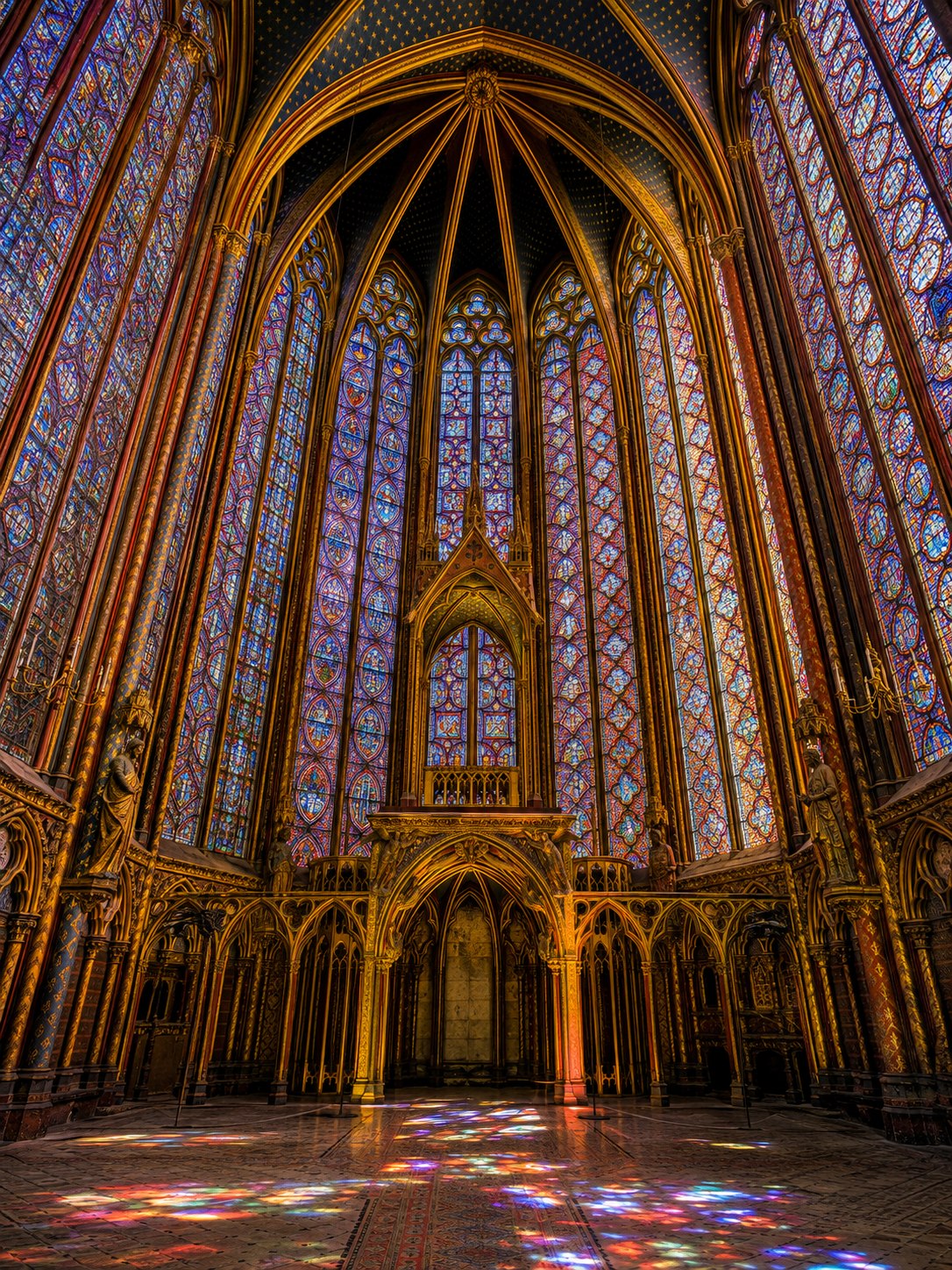
Sainte-Chapelle on a bright morning — the whole point of the building. Illustrative image
Sainte-Chapelle is a fifteen-minute visit and one of the most astonishing rooms in Europe, provided you arrive when the sun is behind the glass. Go at opening. The lower chapel is dim and unremarkable and exists mostly to make the staircase work; the upper chapel is a box of light with almost no wall left in it, and on a clear morning the fifteen lancet windows do something no photograph has ever managed to convey. Add the Conciergerie next door on a joint ticket — Marie Antoinette's cell, and the oldest surviving rooms of the medieval royal palace.
Then Notre-Dame, which reopened in December 2024 after the fire and is once again free to enter. The restoration divided opinion before it was unveiled and has largely silenced it since: the cleaned limestone is far paler than anyone alive remembers, and the interior is brighter than it has been since the eighteenth century. Cross to the Left Bank for lunch in the Latin Quarter, spend an unhurried half hour in Shakespeare and Company, and then save the Louvre for the evening. On Wednesdays and Fridays it stays open until 9:45pm, the tour groups have gone, and the Mona Lisa room is survivable. It is the best crowd decision available in Paris.
Insider Notes
- The Louvre is closed on Tuesdays — as are a great many Paris museums, which is exactly why Versailles is unbearable that day.
- Louvre admission changed in January 2026: non-EU visitors pay €32, EEA residents €22, and everyone — including free-entry categories — must book a timed slot. There is effectively no walk-up box office.
- Enter through the Carrousel du Louvre, the underground entrance off Métro Line 1, not the glass pyramid. Same museum, a fraction of the queue.
- Notre-Dame is free but needs a timed reservation, released through the cathedral's app roughly two days ahead. The tower climb is a separate ticket.
- Give the Louvre three hours and a plan, not six and none. Pick two wings: Denon for the Italian paintings and the Winged Victory, Richelieu for the French sculpture courts. Trying to see it all is how people end up remembering a corridor.
Where to Eat
- Lunch — Les Papilles, near the Panthéon: a wine shop with a kitchen and a no-choice set menu that arrives in a cast-iron pot.
- Dinner — Bouillon Racine, an art nouveau dining room from 1906 at prices that have not caught up with the decor. More romantic: Le Procope, trading since 1686.
- Sweet — Odette, on Rue Galande: chouquettes eaten upstairs at the window with a view of Notre-Dame.
Tickets & Costs
| Sainte-Chapelle / joint with Conciergerie | €13 / €20 |
| Notre-Dame entry / towers | Free / €16 |
| Louvre, non-EU / EEA resident | €32 / €22 |
Day 5 · Paris
Empire, Avenue Montaigne, and the Hill at Dusk
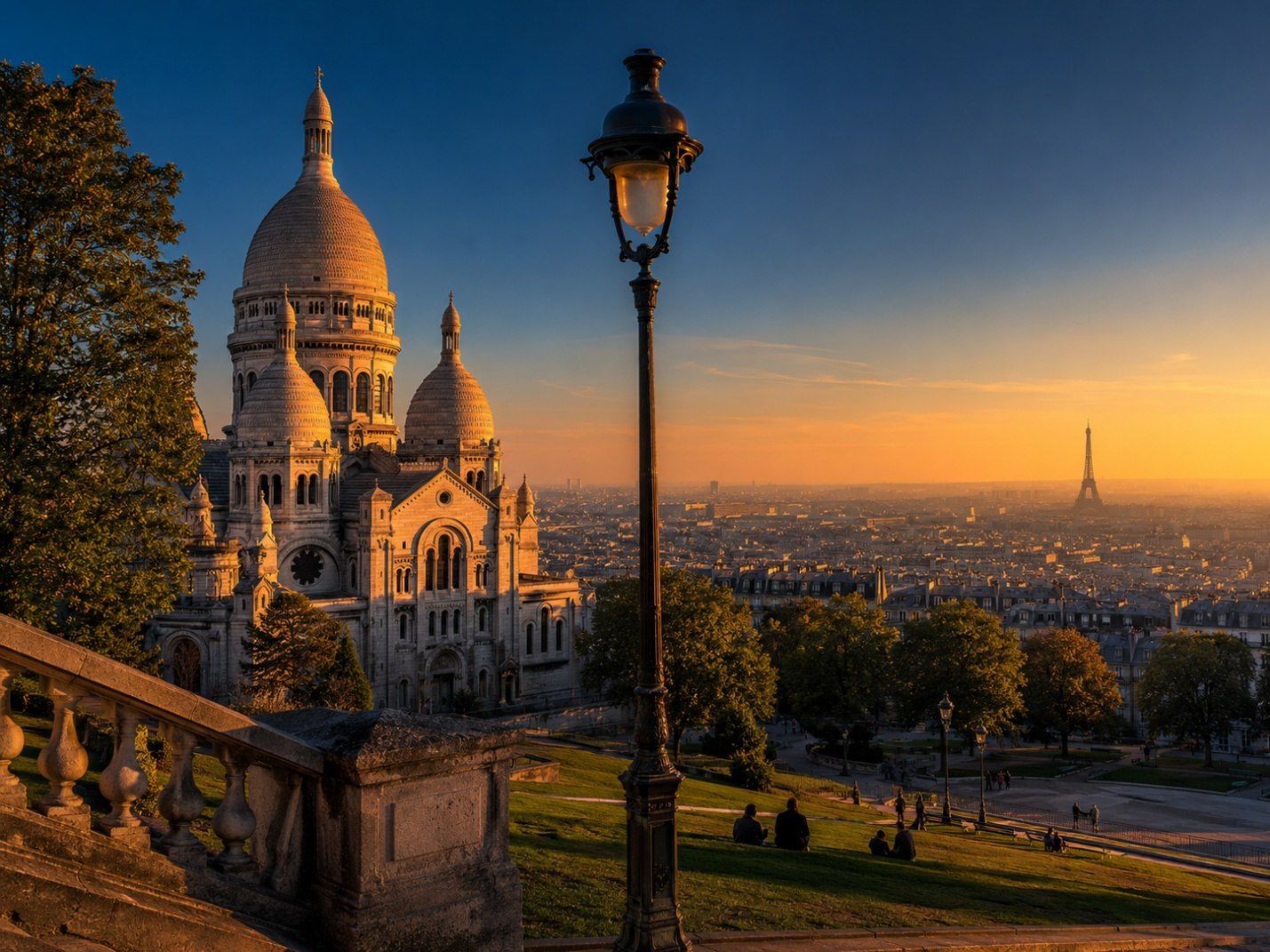
The steps below Sacré-Cœur at dusk, where Paris looks its largest. Illustrative image
Give the morning to the Invalides: a veterans' hospital founded by Louis XIV, the finest military museum in Europe, and the tomb of Napoleon — a red quartzite sarcophagus sunk into an open crypt beneath the gold dome, positioned so that anyone looking at it has to bow their head, which was precisely the intention. Walk five minutes afterwards to the Musée Rodin and buy the garden-only ticket unless it is raining: three hectares of clipped hedges, roses and bronze — The Thinker, The Burghers of Calais, The Gates of Hell — with a café under the trees and almost nobody in it. It is the most quietly romantic hour in central Paris and it costs seven euros.
Give the middle of the day to the Champs-Élysées and, better, Avenue Montaigne one street south — Chanel, Valentino, Celine, Saint Laurent within four hundred metres and none of the crowds. Finish the avenue at the Arc de Triomphe in the late afternoon and go up: the view down all twelve radiating avenues is the one Paris panorama that actually explains how the city was built. Then take the Métro north to Montmartre for early evening. Arrive at Sacré-Cœur while there is still light on the dome, sit on the steps with the whole city laid out flat in front of you, and go inside for the apse mosaic — one of the biggest in the world, which most people on the steps never bother to see. Walk down into the streets below Abbesses for dinner, rather than staying on Place du Tertre.
Insider Notes
- Use the underpass to reach the Arc de Triomphe. Pedestrians crossing the roundabout is not a brave choice, it is a fatal one.
- Shop Avenue Montaigne rather than the Champs-Élysées. The avenue is where the brands advertise; Montaigne is where they sell. Same houses, better stock, better service.
- Ask for the détaxe form at the till, at the moment you pay. VAT refunds start at roughly €100 in a single shop on a single day and cannot be issued retrospectively.
- The Rodin garden ticket is €7 and the garden is the museum. Musée d'Orsay is eight minutes away if the weather turns.
- The Montmartre funicular takes an ordinary Métro ticket. Two hundred and twenty steps, or one ticket. There is no prize for the steps.
- Walk down the west side of the Butte — Rue Lepic and Rue des Abbesses are where Montmartre still functions as a neighbourhood. Place du Tertre is where it does not.
- Optional — the Moulin Rouge, ten minutes downhill at Place Blanche. If you want the cabaret, this is the night: dinner at 7pm with the orchestra, the Féerie revue at 9pm. Book weeks ahead, take the dinner package, and note the dress code — smart, no trainers.
Where to Eat
- Lunch — the Rodin garden café for a croque under the lime trees, or Ladurée on the Champs-Élysées once the shopping starts.
- Dinner — Le Coq & Fils in Montmartre, built entirely around roast chicken and unapologetic about it. Quieter: La Bonne Franquette, where Van Gogh and Pissarro drank.
- Sweet — Gilles Marchal on Rue Ravignan for madeleines made to order and handed over warm.
Tickets & Costs
| Musée de l'Armée & Napoleon's Tomb | €15 |
| Musée Rodin, full / garden only | €14 / €7 |
| Arc de Triomphe rooftop | €16 |
| Sacré-Cœur / dome climb | Free / €8 |
| Moulin Rouge, show with champagne | €120–142 |
| Moulin Rouge, dinner and show | €255–325 |
Day 6 · Versailles
The Palace, and the Hamlet Behind It
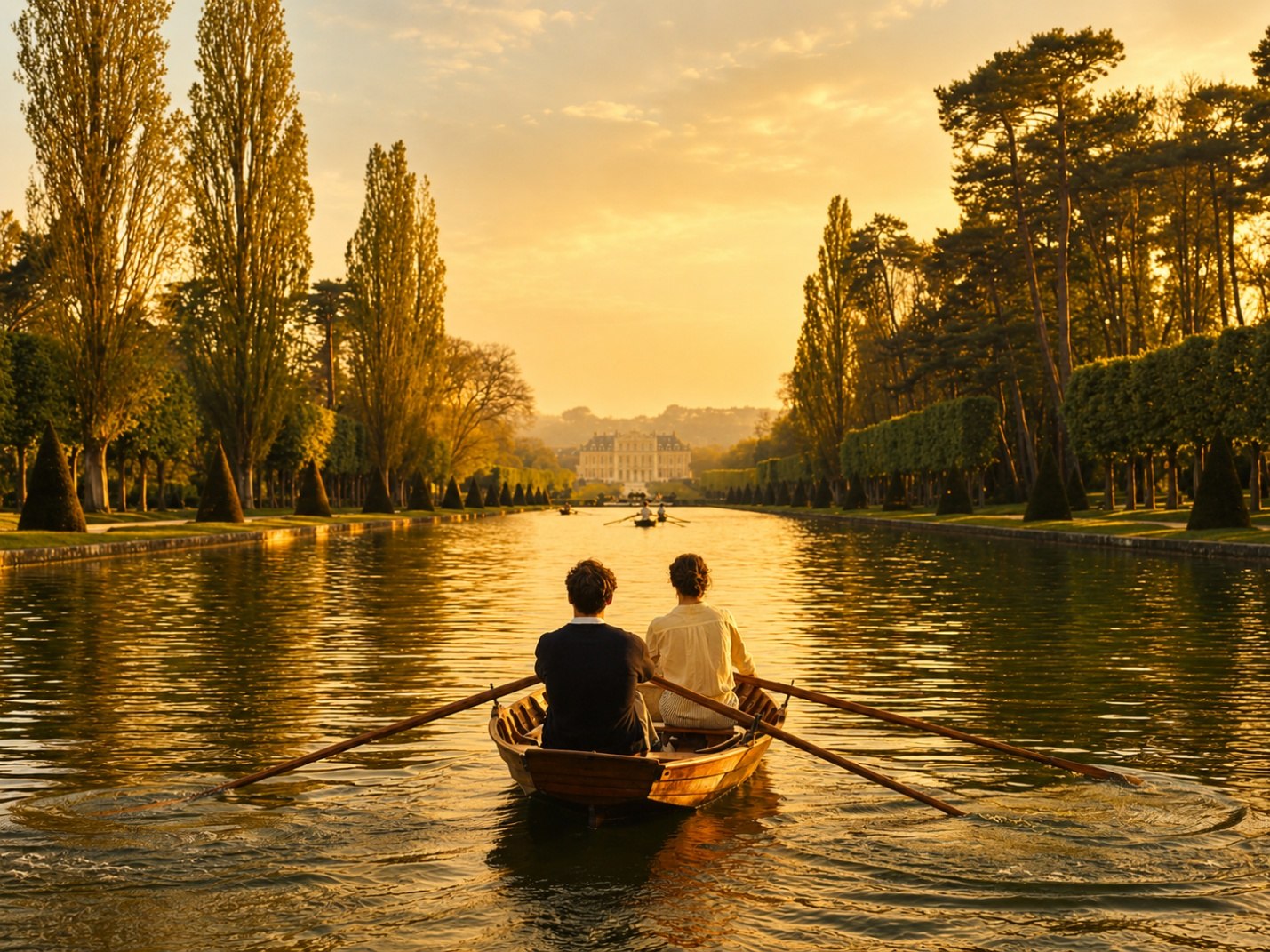
Nineteen euros an hour for a rowboat, and the best hour of the trip. Illustrative image
Versailles is a full day and should be treated as one. Take the RER C to Versailles Château Rive Gauche, buy the Passport with timed palace entry, and be there either at opening or after three — the middle of the day is a slow-moving river of shoulders through the State Apartments. The Hall of Mirrors is the photograph, but the room that actually lands is the Queen's Bedchamber, restored to the exact fabrics of 1789, with the concealed door through which Marie Antoinette fled the mob.
The palace is not the reason to give this a whole day, though. Walk out into the estate, past the parterres and down the length of the Grand Canal, and keep going to the Trianon — the Grand Trianon in pink marble where the king went to escape his own court, and beyond it the Petit Trianon and the Queen's Hamlet, an entire mock village of thatched cottages, a working farm and a mill, built so that the Queen of France could pretend, briefly, not to be. It is strange and rather moving and most day-trippers never reach it. On the way back, hire a rowboat on the Grand Canal for an hour. From 1 April the fountains and groves are running, and the sound of Lully drifting across the water while you row badly in circles is not a thing you will forget.
Insider Notes
- Never go to Versailles on a Tuesday. Most Paris museums close that day and the entire city relocates here. Wednesday and Thursday are calmest.
- The Trianon estate does not open until noon. Do the palace first and walk out after lunch — the sequencing works in exactly one direction.
- Entering the palace after 3pm drops the Passport to €28. Only the palace requires a timed slot; everything else is yours all day.
- The walk to the Hamlet is about forty minutes each way. Bikes, a little train, and golf carts are available near the canal. The golf cart is expensive and gloriously silly and a lot of couples end up doing it anyway.
- Picnics are permitted in the gardens. Buy lunch in Paris before the train and eat it by the canal rather than queueing at the on-site cafés.
Where to Eat
- Lunch — La Petite Venise, in the gardens by the head of the Grand Canal, in the building that once housed Louis XIV's imported Venetian gondoliers. Or the picnic, which is better.
- Dinner — back in the Marais for the last Paris night: Le Mary Celeste for oysters and cocktails, or Chez Janou again because by now it is yours.
- Sweet — Angelina's outpost inside the palace makes the hot chocolate Paris is genuinely famous for. Thick enough to stand a spoon in.
Tickets & Costs
| Passport with timed entry, high season | €35 |
| Passport after 3pm | €28 |
| RER C return, Paris to Versailles | €7.90 |
| Rowboat on the Grand Canal, per hour | €19 |
| Bicycle / golf cart, per hour | €9 / €42 |
Day 7 · Brussels
Guildhouses, Chocolate, and Two Thousand Beers in a Cellar
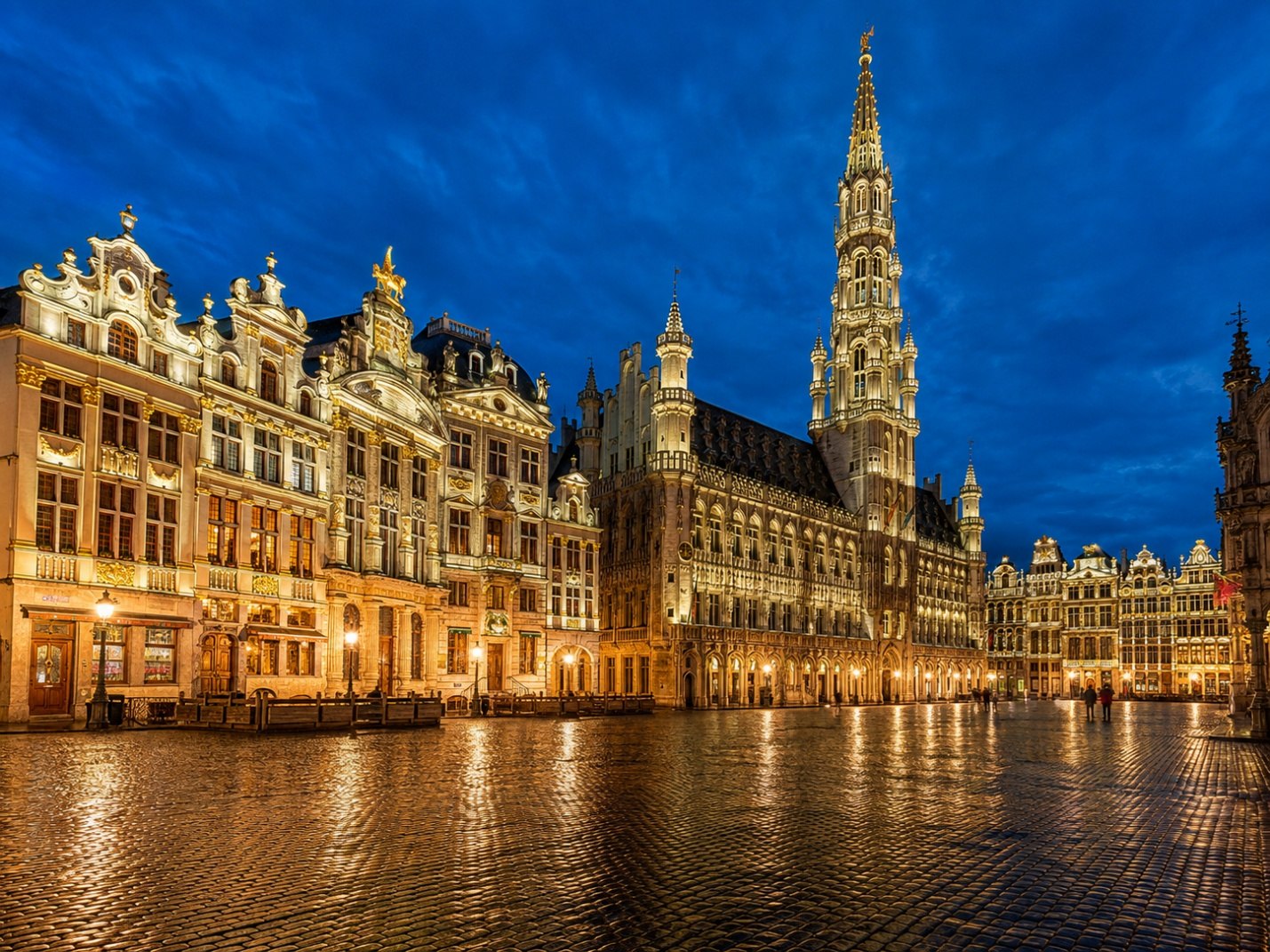
The Grand Place is a daytime square that becomes a great one after dark. Illustrative image
Take a mid-morning Eurostar from Gare du Nord and you are in Brussels in an hour and twenty-five minutes, which is less time than it takes to get to most airports. Drop the bags at the hotel and walk to the Grand Place, which arrives the way it is supposed to — through a narrow lane, all at once, with no warning. Victor Hugo called it the most beautiful square in the world and it is difficult to argue on the spot: gilded seventeenth-century guildhouses on three sides, a Gothic town hall with an off-centre spire on the fourth, and nothing modern in the frame at all.
Give the rest of the afternoon to the pleasures Brussels is actually good at. Walk the Galeries Royales Saint-Hubert, Europe's first covered shopping arcade. Do a chocolate comparison on foot — Pierre Marcolini for the serious stuff, Mary for the royal warrant, Laurent Gerbaud for cocoa purists — and buy a cone of frites from a proper friterie with a sauce you cannot name. Then go and take Belgian beer seriously, because it is a national art form with a UNESCO listing to prove it. Delirium Café is the address, and the way to do it properly is to walk past the ground floor and go down into the cellar bar, where the vaulted brick, the long benches and roughly two thousand beers are. Come back to the Grand Place after dark when it is floodlit and half empty, which is when it earns Hugo's line.
Insider Notes
- Eurostar is an international service with border control. Be at Gare du Nord 45–60 minutes early. Advance fares start around €59; walk-up pricing is brutal.
- Manneken Pis is small. Sixty-one centimetres. The entire point of him is that he is an anticlimax. See him, laugh, move on.
- Belgian beers run eight to twelve percent and are served in small glasses for a reason. Two Belgian beers is not two beers.
- At Delirium, go downstairs. The ground floor and alley are where the stag parties collect. The cellar underneath is the real thing. Tell a bartender what you like — sour, dark, sweet, strong — and let them choose.
- À la Mort Subite and Moeder Lambic are the two other serious rooms: the first a 1928 café with the original mirrors, the second the place for lambic and gueuze.
- Brussel and Bruxelles are the same place, Midi and Zuid are the same station. This confuses more visitors than anything else in the city.
Where to Eat
- Lunch — on the train, or a cone of frites from Maison Antoine eaten standing up, which is what Brussels does at midday.
- Drinks — Delirium's cellar bar. Do not try to read the menu — it held the Guinness record for the largest beer list on earth. Tell the bartender what you like and drink what arrives.
- Dinner — Le Fin de Siècle on Rue des Chartreux: no reservations, cash only, and a blackboard of carbonnade flamande, stoemp and rabbit in gueuze. Arrive early.
- Sweet — a Liège waffle, dense and caramelised, from Maison Dandoy. Not a Brussels waffle, which no Belgian eats on the street.
Tickets & Costs
| Eurostar, Paris to Brussels, advance | €59–160 |
| Grand Place & Galeries Royales | Free |
| Town Hall guided tour | €12 |
| Chocolate tasting walk, for two | €20–40 |
| Delirium cellar, two beers each | €20–30 |
Day 8 · Bruges
A Day Trip to the Best-Preserved Medieval City in Europe
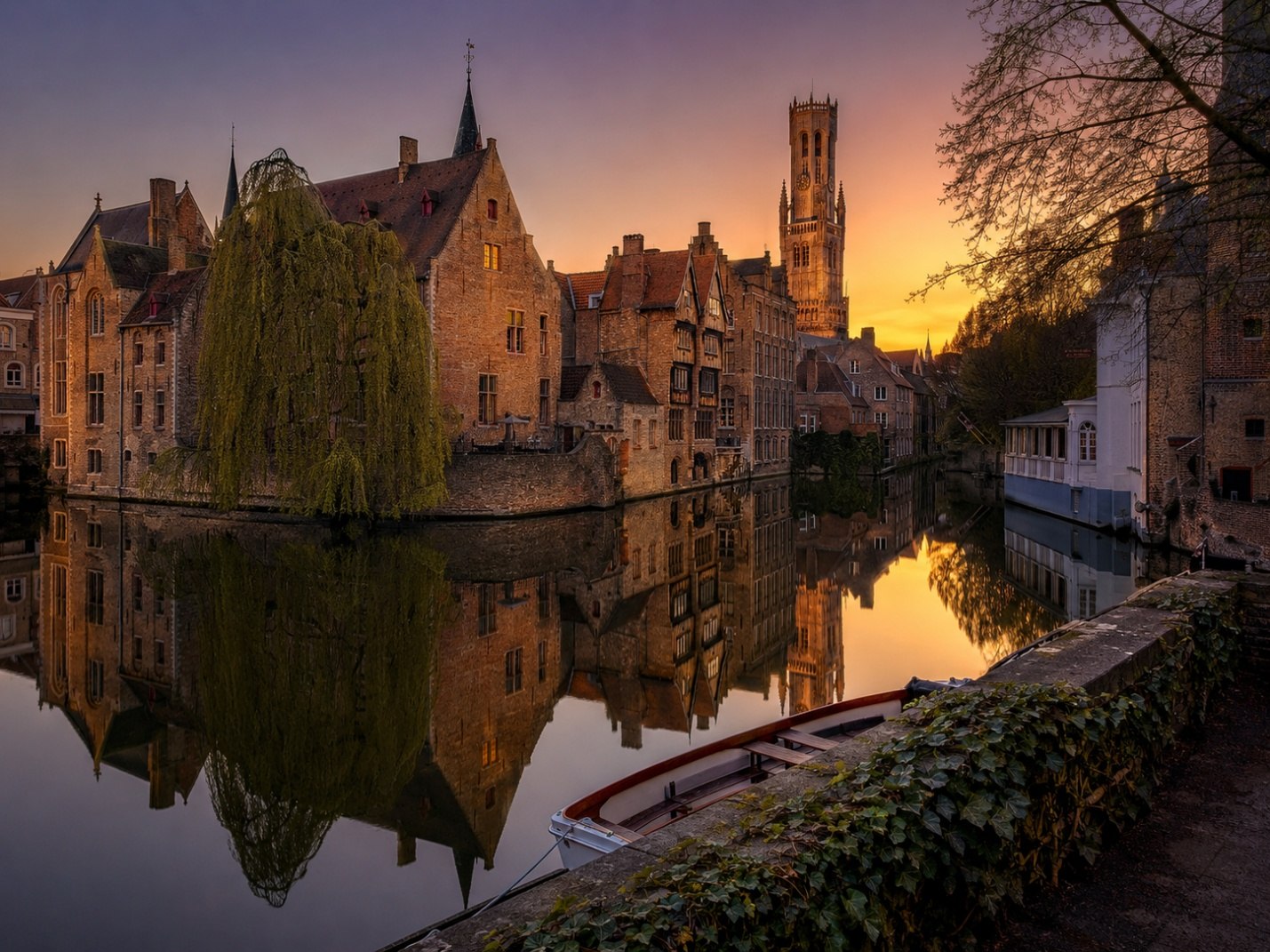
Bruges after six, when the day-trippers have gone and the city is yours. Illustrative image
Bruges is an hour from Brussels by train and it is the single most romantic day on this itinerary, provided you get the timing right. The city receives an enormous volume of day visitors who arrive around eleven and leave around five, and the difference between Bruges at two in the afternoon and Bruges at seven in the evening is the difference between a theme park and one of the most beautiful places in Europe. So take an early train, and take the last one back.
Start in the Markt with the Belfry — three hundred and sixty-six steps up a leaning fourteenth-century tower to a carillon of forty-seven bells and a view across the red roofs to the North Sea. Walk through to the Burg, the older and quieter square, and into the Basilica of the Holy Blood. Then take a canal boat, which is touristy and entirely worth it, because Bruges was built to be seen from the water and half its best façades face nothing else. Spend the afternoon in the Groeningemuseum with the Flemish Primitives — Van Eyck and Memling, painted here, five hundred years ago, still astonishing — and end at the Begijnhof and the Minnewater, the Lake of Love, where the swans are descended from a flock the city was ordered to keep in perpetuity in 1488. Have dinner in Bruges and catch a late train home.
Insider Notes
- First train out, last train back. Everything about Bruges improves after six o'clock. The evening light on the Rozenhoedkaai is the photograph the city is known for, and you will have room to take it.
- Book the Belfry climb online. Only seventy people are allowed inside at a time and the queue can run over an hour. The staircase is narrow, spiral, and two-way in places.
- Canal boats run roughly March to November. Thirty minutes, about fifteen euros, best early before the boats queue at the bends.
- Most window lace is machine-made and imported. For the real thing, the Kantcentrum in the east of the city still makes it by hand and sells with provenance.
- Horse-drawn carriages cost about €60 for thirty minutes and cover ground you can walk in twenty. Charming, expensive, entirely optional.
Where to Eat
- Lunch — De Halve Maan, the last working family brewery in the centre, where the tour ends on the roof with a glass of Brugse Zot and a view over the whole of Bruges.
- Dinner — Cambrinus for Flemish stews and an absurd beer menu, or Den Dyver, which pairs every course with a beer rather than a wine and does it seriously.
- Sweet — Chocolatier Dumon, run by the same family for generations, still made in small batches in the back. Buy more than you think you need.
Tickets & Costs
| Train, Brussels to Bruges, return | €32 |
| Belfry of Bruges | €15 |
| Canal boat, 30 minutes | €15 |
| Groeningemuseum | €15 |
| De Halve Maan tour with beer | €18 |
| Basilica of the Holy Blood | Free, treasury €5 |
Day 9 · Brussels to Antwerp
Magritte in the Morning, and the Grandest Station in Europe
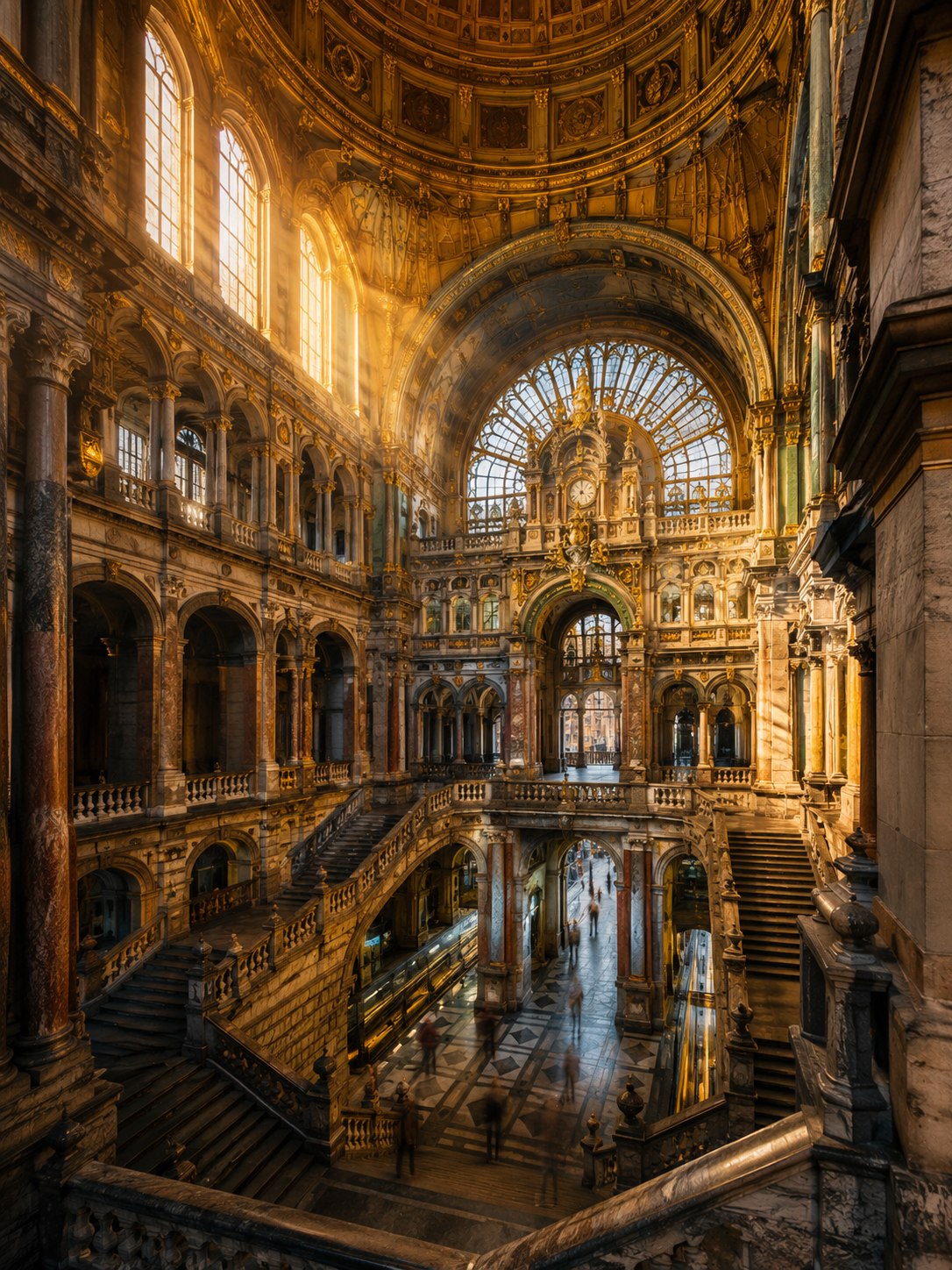
Antwerp is the only city where you arrive inside the best building in town. Illustrative image
Give the last Brussels morning to the Mont des Arts and the Magritte Museum, which holds the largest collection of his work anywhere — over two hundred pieces, arranged chronologically over three floors, and far stranger and funnier in the flesh than the posters suggest. Then walk up to the Sablon: antique dealers, the flamboyant Gothic church, and the two chocolate houses worth the money in this city, Pierre Marcolini and Wittamer, facing each other across the square.
The midday train to Antwerp takes forty-five minutes and delivers you into Antwerpen-Centraal, which is not a station so much as a cathedral that happens to run trains. Marble, gilt, a sixty-metre stone dome, and four stacked levels of platforms inserted into it in 2007 without disturbing a thing. Walk out into the diamond quarter, which begins two hundred metres from the door, and on into the old city. The Cathedral of Our Lady holds four Rubens altarpieces hanging exactly where he painted them to hang. Finish on the rooftop of the MAS at sunset, which is free, open late, and gives you the river, the port and the whole of the old city at once.
Insider Notes
- The Rubens House is closed for restoration until 2030 at the earliest. The new Rubens Experience, library and garden are open on a €12 ticket; most of the paintings have moved to the KMSKA. Go in knowing that, or do not go.
- Go to the top level of Antwerpen-Centraal and look down. The stacked platforms are the most impressive engineering in the building and almost every visitor walks straight out without seeing it.
- The MAS rooftop escalators are free and open late. No ticket, no queue, best view in Antwerp.
- Antwerp is a fashion city, not a tourist city. The Nationalestraat is where the Antwerp Six changed European fashion in the 1980s; Dries Van Noten's Het Modepaleis is still there.
- Belgian domestic trains need no reservations. Turn up, buy a ticket, get on — which makes a one-night stop like this genuinely easy.
Where to Eat
- Lunch — on the Sablon before the train, or Wittamer's tea room upstairs for something more indulgent.
- Dinner — Het Nieuwe Palinghuis for North Sea fish and the eel the city is known for; or Bar Paniek in the old warehouse district, younger and livelier and right by the water.
- Sweet — Goossens, a bakery making the same raisin bread since 1884 and selling out of it daily.
Tickets & Costs
| Magritte Museum | €13 |
| Train, Brussels to Antwerp | €18 |
| Cathedral of Our Lady | €12 |
| MAS rooftop / galleries | Free / €12 |
| Rubens Experience & garden | €12 |
Day 10 · Antwerp to Amsterdam
Ensor, Rubens, and the First Canal
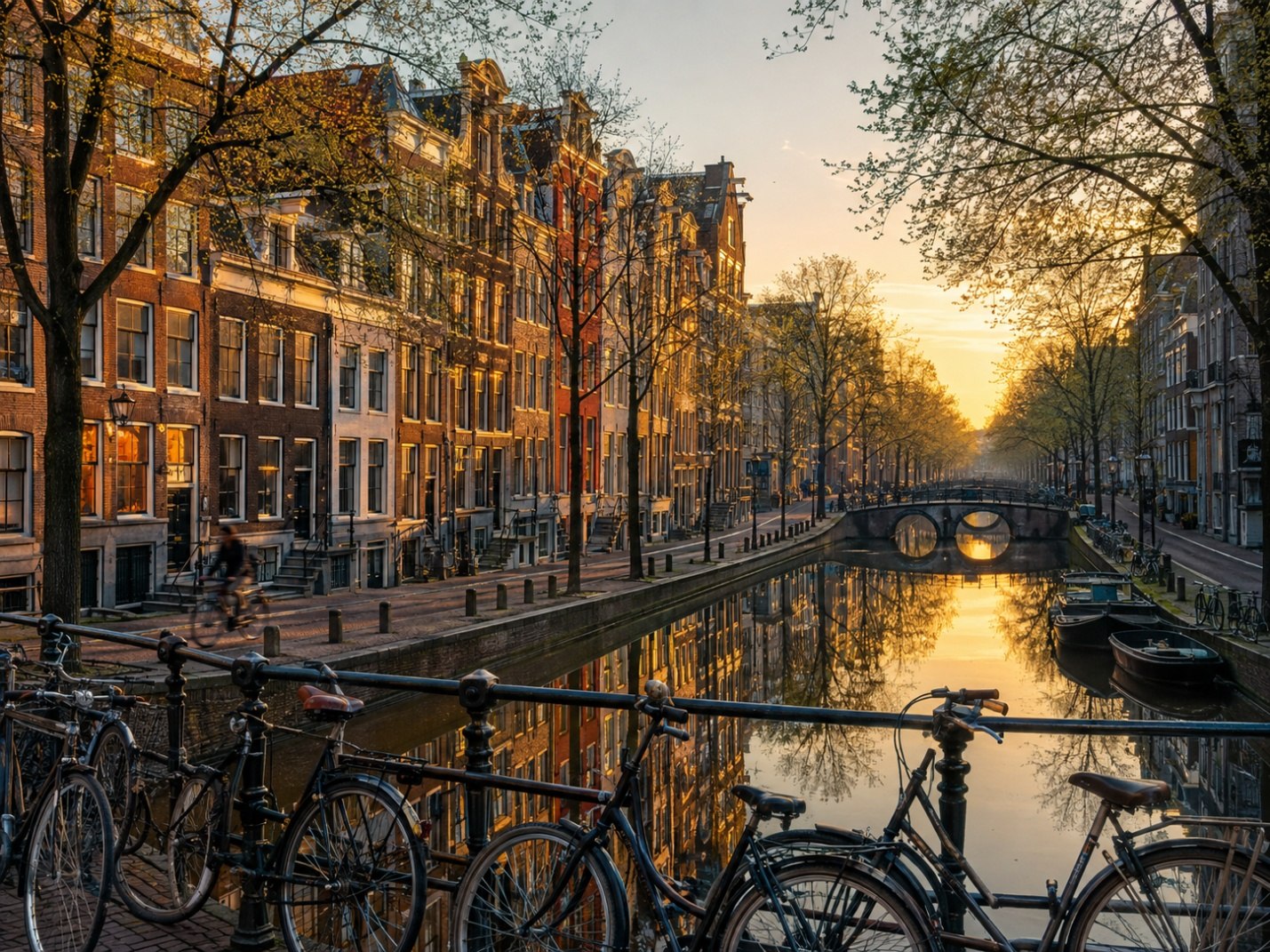
The canal belt at dusk, which is when Amsterdam stops being a postcard. Illustrative image
Spend the morning at the KMSKA, the Royal Museum of Fine Arts, which reopened in 2022 after eleven years and is now one of the best museums in Europe that almost nobody outside Belgium talks about. The old galleries hold the Flemish masters, including the Rubens paintings displaced from his house; a new white structure inserted invisibly into the courtyards holds the largest collection of James Ensor in the world — strange, savage, funny, and completely unlike anything else in Belgian art. If you would rather have something smaller, the Plantin-Moretus is a UNESCO-listed sixteenth-century printing house preserved intact, with the two oldest surviving printing presses on earth still standing in the workshop.
The direct intercity to Amsterdam takes a little over two hours. Check in, and then do nothing organised for the rest of the day. Walk the Nine Streets, cross the Herengracht, the Keizersgracht and the Prinsengracht in that order, and let the city do what it does at dusk — the lights come on in the tall windows, nobody in Amsterdam closes their curtains, and the whole canal belt turns into a very long row of lit interiors. Dinner in the Jordaan.
Insider Notes
- Do not walk in the bike lanes. The single most common visitor mistake in Amsterdam. The red asphalt is a road, not a pavement, and cyclists are fast, silent and entirely unforgiving.
- Trams and buses take contactless cards directly — tap in and out with the same card. No paper ticket needed for a short stay.
- Centraal to the canal belt is a ten-minute walk. Do not take a taxi; the one-way system makes it slower than walking.
- Book Anne Frank House tickets before this trip is even confirmed. Slots release every Tuesday at 10:00 Amsterdam time for the same week six weeks later — see tomorrow's notes.
- April is tulip season and hotel rates reflect it. This is the one week of the year when canal-house hotels price like Paris. Book early, book direct.
Where to Eat
- Lunch — in Antwerp before the train: Fiskebar for oysters, or a broodje from Goossens on the walk to the station.
- Dinner — Café Restaurant De Reiger in the Jordaan, a proper brown café with a serious kitchen. Or Balthazar's Keuken, where there is no menu at all and you eat what they cooked.
- Sweet — Van Wonderen on the Kalverstraat, where the stroopwafels come off the iron warm.
Tickets & Costs
| KMSKA | €20 |
| Plantin-Moretus Museum | €12 |
| Intercity, Antwerp to Amsterdam | €30–45 |
| Amsterdam tram, per journey | €3.40 |
Day 11 · Amsterdam
The Annexe, the Jordaan, and a Boat at Golden Hour
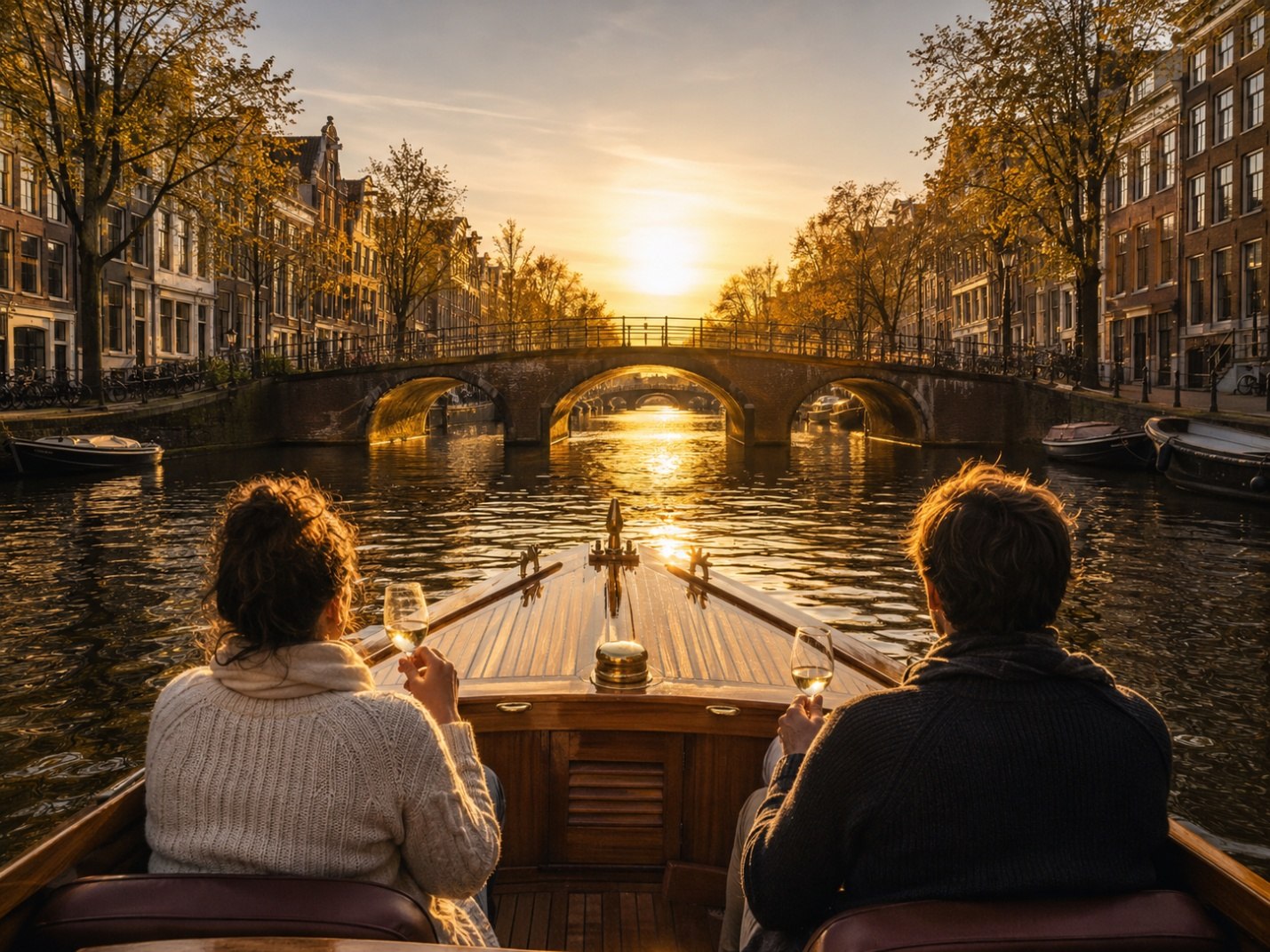
A private sloop at golden hour — the version of a canal cruise worth paying for. Illustrative image
The Anne Frank House takes about ninety minutes and it will set the tone of the day, so do it first and give yourself somewhere gentle to go afterwards. The route runs through the front warehouse and offices, up behind the bookcase, and into the Secret Annexe itself, kept unfurnished at Otto Frank's insistence. It is quiet, steep, and very small, and the thing that lands hardest is not the history but the scale — eight people, two years, in rooms you can cross in four steps.
Come out onto the Prinsengracht and climb the Westerkerk tower directly opposite, which goes up in groups of six with a guide and gives you the best view of the canal belt in the city. Then walk north into the Jordaan and let the afternoon go slack: the Noordermarkt, the courtyards and almshouses, apple pie at Winkel 43 — the one queue in Amsterdam worth joining. In the late afternoon, get on the water: not one of the big glass-topped tour boats, but a small open sloop with a skipper, a bottle of something cold, and ninety minutes to go under the bridges as the lights come on. It costs about what a good dinner costs and it is the memory people take home.
Insider Notes
- Anne Frank House tickets release every Tuesday at 10:00 Amsterdam time, for the same week six weeks later. Morning slots sell out in two to three minutes in season. No walk-ups, no exceptions. Set an alarm — this is the hardest booking on the itinerary.
- The Annexe is physically demanding: three steep staircases and one step of nearly forty centimetres. There is no lift and there cannot be one.
- The Westerkerk tower is guided-only, six people at a time, and closes in bad weather.
- Choose a small open boat over a big covered one. The bridges are low and the whole pleasure is being at water level with the sky open. A private charter for two is not much more than a shared sloop.
- The brown cafés are the real institution here — dark wood, no music, a beer and a bitterbal. Café Papeneiland and Café Chris in the Jordaan are the ones to look for.
- Optional, after dinner — a coffeeshop, done properly. Boerejongens Centrum on Utrechtsestraat is the most comfortable version in the city: marble, brass, and budtenders in three-piece suits trained in hospitality as much as product. Say plainly that you are new to it. Buy small, start at half of whatever you think, wait a full hour before deciding anything, and never combine it with alcohol. Bring your passport; nothing you buy can legally leave the country.
Where to Eat
- Lunch — Winkel 43 on the Noordermarkt for the appeltaart, a slab rather than a slice, with a mountain of cream. Or Café Papeneiland, on a canal corner since 1642.
- Dinner — Restaurant De Belhamel, where the Herengracht meets the Brouwersgracht, in an art nouveau room with the best canal table in Amsterdam. Book weeks ahead and ask for a window.
- Sweet — Van Stapele in the centre makes exactly one thing — a dark chocolate cookie with a white chocolate centre — and closes when it sells out.
Tickets & Costs
| Anne Frank House / with intro programme | €16.50 / €23.50 |
| Westerkerk tower climb | €10 |
| Shared canal cruise, one hour | €18–22 |
| Private sloop charter, 90 minutes | €200–300 |
| Coffeeshop, optional, per person | €15–30 |
Day 12 · Amsterdam
The Golden Age, an Afternoon With Vincent, and a Basement in Noord
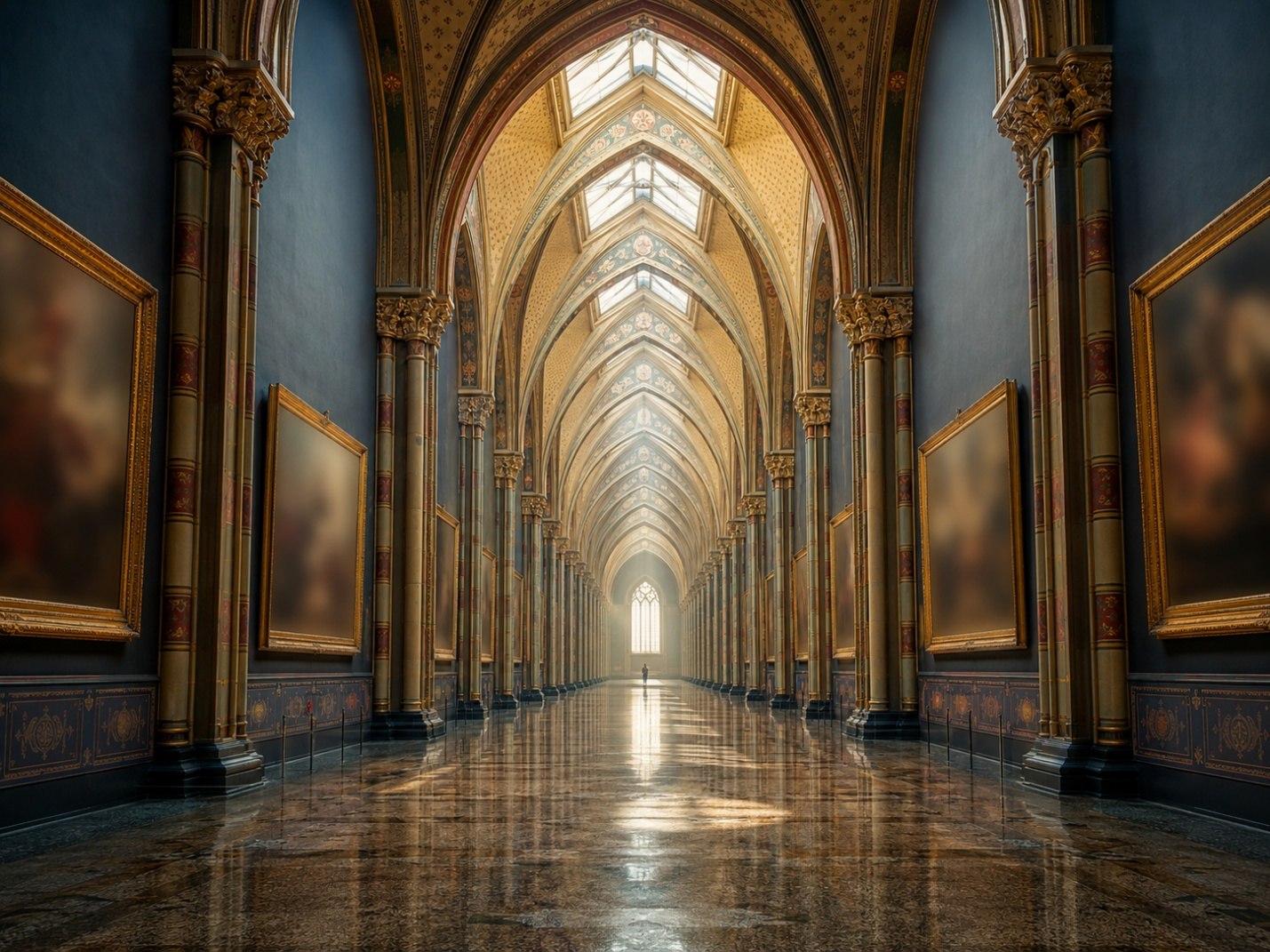
Nine o'clock at the Rijksmuseum, before the Night Watch acquires its crowd. Illustrative image
Be at the Rijksmuseum for nine, walk straight to the Gallery of Honour, and see The Night Watch with room to stand back from it — which matters, because the whole painting is built around a diagonal that only resolves at distance. Then reverse the usual route and work backwards through the Golden Age galleries: Vermeer's Milkmaid, Hals, the Delftware, the doll's houses that cost as much as real houses. The building itself is worth an hour on its own.
Cross Museumplein after lunch to the Van Gogh Museum, the largest collection of his work anywhere, arranged so that you watch a man teach himself to paint in ten years and then run out of time. It is chronological, it is devastating in the last two rooms, and it is worth the second museum in a day precisely because of that arc. Afterwards, walk it off in the Vondelpark, then take the tram down to De Pijp for the evening — the Albert Cuyp market at the end of the day, a brown café, and dinner in the grid of streets behind it.
And if you want the other Amsterdam, this is the night to go and find it. The city's techno scene is one of the best in Europe and it lives almost entirely across the water in Noord, in warehouses and basements that locals reach by bicycle. Shelter, buried under the A'DAM Tower, is the room to aim for: doors at eleven, the floor fills around one. Take the free Buiksloterweg ferry from behind Centraal — four minutes across the IJ in the dark, and worth doing even if you turn around at the other side.
Insider Notes
- The Van Gogh Museum is sold online only, with a timed slot, and sells out in season. It has not been in the I amsterdam City Card since 2022.
- Go to the Rijksmuseum at opening, not closing — the last hours are quiet but you lose the Gallery of Honour skylights, which are the reason the room works.
- The passage underneath the Rijksmuseum is free and open to cyclists, and there is almost always a good busker in it.
- Albert Cuyp is a working market. Go for the herring stall, the stroopwafel iron, and the Surinamese roti — Amsterdam's most underrated food is Indonesian and Surinamese, not Dutch.
- Dutch club door policy is about attitude, not clothes. Small group, sober enough to hold a conversation, no photos of the dancefloor, and do not arrive at 11pm expecting atmosphere. Buy tickets on Resident Advisor in advance.
- If Shelter is sold out: Radion holds a 24-hour licence in a former dentistry school; Garage Noord is small and close to the booth; BRET is the friendliest. All are locals' rooms, which is the point.
Where to Eat
- Lunch — MOMO near the Museumplein, or the Rijksmuseum's own restaurant, unusually serious for a museum canteen.
- Dinner — Sinne in De Pijp, a small Michelin-starred room doing a set menu at a price that would be impossible in Paris. Looser: Volt or Bar Fisk on the same streets.
- Sweet — a warm stroopwafel from the Albert Cuyp market, eaten standing up, which is the only correct way.
Tickets & Costs
| Rijksmuseum | €25 |
| Van Gogh Museum | €25 |
| Moco Museum, optional | €21 |
| Shelter or Radion, entry | €20–30 |
| Buiksloterweg ferry to Noord | Free, 24 hours |
Day 13 · Keukenhof
Seven Million Bulbs, and the Fields Behind the Fence
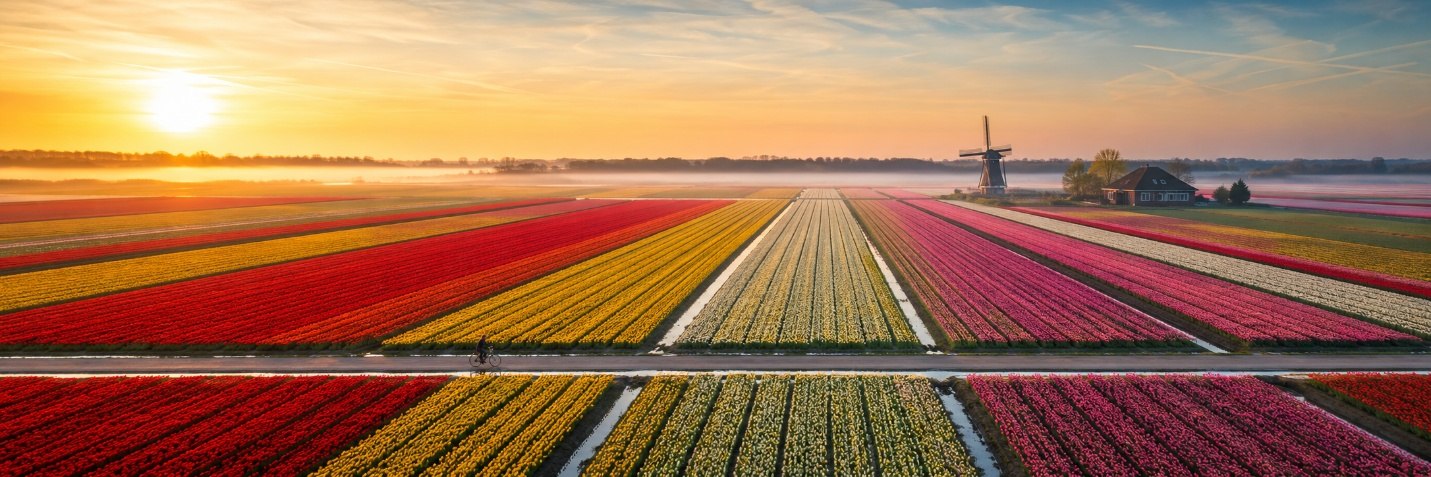
The gardens are the ticket. The fields around them are the reason to come in April. Illustrative image
This is the day the calendar was built around. Keukenhof opens for eight weeks a year and no longer, roughly 19 March to 10 May, and peak bloom in a normal year falls between the tenth and the twenty-fifth of April. Seven million bulbs across thirty-two hectares, planted by hand every autumn by growers who treat it as a shop window, and it is exactly as absurd and as beautiful as that sounds. Take the first slot of the day: the gates open at eight, and the first ninety minutes are quiet, cool, and the only time the paths photograph without strangers in them.
Do the gardens in the morning — the pavilions, the historical garden, the windmill you can climb for a view straight out over the fields — and then do the thing most visitors miss entirely. Rent a bike at the gate and ride the bulb-field loop through the Bollenstreek. The commercial fields outside the fence are free, enormous, and considerably more spectacular than anything inside it: solid blocks of colour running to the horizon in stripes, changing every few hundred metres. Two hours on a bike out there is the best thing you will do in the Netherlands. Back to Amsterdam mid-afternoon, and a farewell dinner that should, on the last night, be Indonesian.
Insider Notes
- Every ticket is a fixed date and time slot, and popular days sell out two to three weeks ahead. The combination ticket with the return shuttle from Amsterdam is €38.50 and removes all the logistics.
- Tuesday to Thursday are markedly quieter than the weekend. The Flower Parade weekend in mid-April is spectacular and completely overrun; decide which fact matters more to you.
- Do not walk into the bulb fields. They are commercial crops. Photograph from the verge or the bike path.
- The windmill inside Keukenhof has a viewing platform over the fields and is the best free thing in the gardens. Most people walk past it.
- Bulbs bought at Keukenhof can be shipped, but the US, Canada and India all require a phytosanitary certificate — the growers on site can supply one; the Bloemenmarkt stalls in Amsterdam frequently cannot.
Where to Eat
- Lunch — on site is adequate rather than good; better to stop in Lisse on the bike loop, or take a picnic and eat it on the verge of a field, which is the correct answer.
- Dinner — Restaurant Blauw for a rijsttafel, the Indonesian rice table: fifteen to twenty small dishes arriving at once. The essential last night.
- Sweet — poffertjes, small yeasted pancakes with butter and icing sugar, from any stall with a proper cast-iron plate.
Tickets & Costs
| Keukenhof entry, online | €20.50 |
| Combination ticket with Amsterdam bus | €38.50 |
| Bicycle hire at Keukenhof, per day | €10–15 |
| Rijsttafel dinner, per person | €40–55 |
Day 14 · Departure
One Last Canal, and the Train to Schiphol
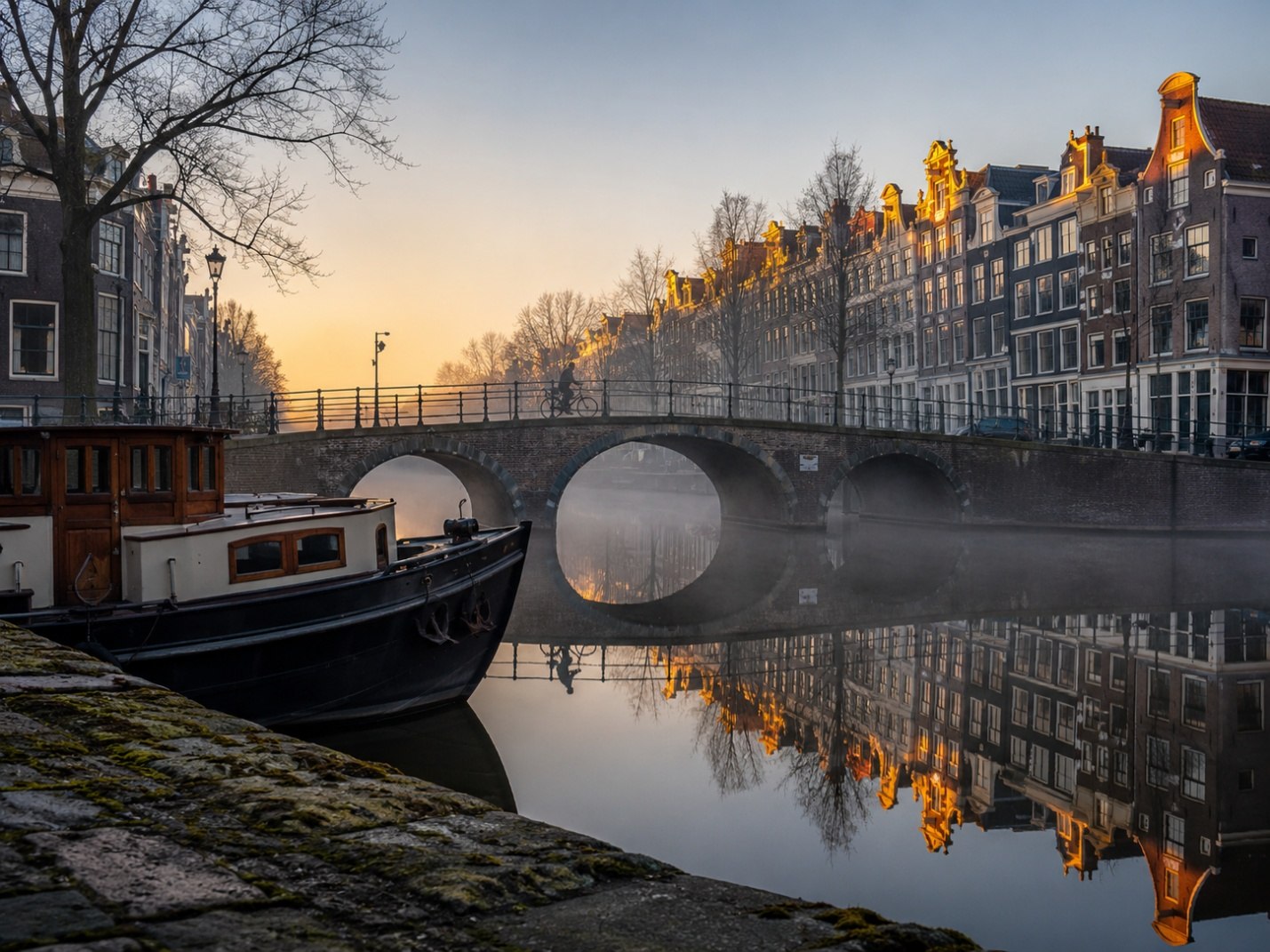
The canals at seven in the morning belong to the people who live here. Illustrative image
Amsterdam in the early morning is a different city — the canals are still, the bikes have not started, and the light comes down the water in a way it does not at any other hour. Take the coffee outside, walk one last loop of the Brouwersgracht, and buy the bulbs on the way back if you are going to. The train from Centraal to Schiphol runs every ten minutes and takes seventeen, which makes this the easiest departure of any major European city.
Give yourself three hours at the airport if you are flying outside the Schengen area. Schiphol is efficient and enormous and the walk to the far gates is genuinely long. If you have been buying — Delftware, diamonds in Antwerp, anything over the threshold — the VAT paperwork is done before check-in, with the goods still accessible.
Insider Notes
- Train to Schiphol: €5.90, seventeen minutes, every ten minutes. A taxi costs around €55 and is frequently slower.
- Three hours for non-Schengen departures. Passport control plus the walk to the far piers is not a twenty-minute exercise.
- The Bloemenmarkt bulbs are a souvenir, not a purchase. If you want bulbs that will grow and that customs will accept, buy them at Keukenhof with the certificate.
One Last Meal
- Breakfast — somewhere on a canal with an outside table. It is the last one; do not eat it standing at the station.
Tickets & Costs
| Train, Centraal to Schiphol | €5.90 |
| Taxi to Schiphol | €50–60 |
Photographs From My Own Travels
The trip that started all of this.
These were taken on the original run of this route — four friends, a Eurail pass, and the same cities in the same order. The places haven't changed. The hotels got better.


Before You Go
Book these before you leave home.
Six things on this itinerary sell out and have no walk-up alternative, in rough order of difficulty.
The bookings that sell out
- Anne Frank House — released every Tuesday at 10:00 Amsterdam time for the same week six weeks later. Morning slots go in two to three minutes. The hardest booking on the trip by a wide margin.
- Keukenhof — fixed date and time slot; peak-bloom weekends sell out two to three weeks ahead.
- Eiffel Tower summit — sixty days ahead at 8:30am Paris time, second release seven days out at 1:00pm.
- The Louvre — every visitor needs a timed slot, including free-entry categories.
- Versailles Passport and the Van Gogh Museum — both timed, the latter online only.
- Eurostar Paris–Brussels — booking early versus late is roughly a hundred euros a head.
- Plus the Moulin Rouge dinner show if you want it, and tables at De Belhamel and Sinne in Amsterdam — all booked weeks out.
Before you go — passports, ETIAS, and Schengen visas
- France, Belgium and the Netherlands are all Schengen: one border, entered once, in Paris. Canadian, US, UK and Australian passports need no visa under ninety days — valid three months beyond departure, two blank pages. Check ETIAS status before travelling.
- Indian passport holders and others requiring a Schengen visa should apply through the French consulate — France is the country of first entry and most nights. Allow six to eight weeks. The application wants confirmed hotels for every night, a day-by-day itinerary, proof of funds, and travel medical insurance with €30,000 minimum coverage — all of which this document is designed to supply.
Money and payment
- All three countries use the euro. The Netherlands is the outlier in an unexpected direction: many Dutch businesses take only Maestro or local debit and refuse credit cards outright, including some supermarkets. Carry some cash there.
- Always decline being charged in your home currency — dynamic currency conversion sets the rate against you.
- Tipping is not expected anywhere on this route. Rounding up, or five percent for genuinely good service, is generous. A French couvert is normal and not a scam.
Trains — the two things that cost people money
- Eurostar is an airline that runs on rails. Named, non-transferable, dynamically priced tickets — three months out can be a third of three days out. Check in 45–60 minutes ahead; missing it means buying a new ticket.
- Belgian and Dutch domestic trains are the opposite. No reservations, turn up and go. Do not buy in advance; there is no saving and you lose the flexibility.
- Brussels has three main stations — Midi/Zuid, Central, Nord — and they are not interchangeable. Eurostar uses Midi/Zuid only.
Mid-April — the seasonal reality
- Ten to sixteen degrees, long light evenings, and rain that arrives without warning and leaves the same way. Best-value window of the year in Paris and Brussels; the most expensive week of the year in Amsterdam, because of the tulips.
- Two dates to watch: Easter moves, and if it falls in your window every museum in three countries is at capacity. King's Day, 27 April, turns the whole of Amsterdam orange and effectively closes the city to normal travel — glorious if you plan for it, catastrophic if you do not.
Practical odds and ends
- Shoes decide how much you enjoy this trip. Paris cobbles, Bruges cobbles, Amsterdam's humpbacked bridges, fifteen kilometres on a good day.
- Amsterdam's canal-house staircases are close to vertical — houses were taxed on width, so everything went up. Many hotels have no lift; if this matters, say so at booking.
- Never walk in a Dutch bike lane. There are more bicycles in Amsterdam than people.
- Dress codes at Notre-Dame, Sainte-Chapelle and the Belgian cathedrals — shoulders and knees covered. A light scarf solves it.
- Pickpocketing concentrates in four places: Métro Line 1, the Gare du Nord concourse, the crush at Manneken Pis, and Amsterdam Centraal.
- Learn six words in each language. Bonjour and merci; dank u wel and alstublieft. Greeting a shopkeeper before you ask anything is a genuine social expectation in France.
- Dutch coffeeshops are tolerated, not unregulated: eighteen with photo ID, five grams per person per day, nothing leaves the country. Cannabis remains illegal in France and Belgium, including in transit — do not carry anything onto the train.
- VAT refunds: roughly €100 in France, €125 in Belgium, €50 in the Netherlands, from a single store. Claim at Schiphol before check-in, goods accessible.
- The emergency number is 112 in all three countries. Travel medical coverage is worth having, and mandatory for Schengen visa applicants.